|
Okay, here is the article about the super fast return of Shenzhou-21. I'll organize it for you. The main contents are as follows:
Mission Overview: Shenzhou-21's return capsule successfully landed, completing China's first three-orbit rapid return.
Background & Challenge: The return was delayed due to a suspected micro-debris impact, requiring swift analysis and risk assessment.
Technical Breakdown: The key was shifting from ground-based to onboard computation of deorbit parameters.
Significance: The achievement reduces return time by over three hours and enhances autonomous fault response.
Historical Context: China has developed two generations of re-entry guidance technologies over three decades.
Future Outlook: The success paves the way for more efficient and reliable future crewed missions.
Then, I will now begin writing the main body of the article.
The Super Fast Return of Shenzhou-21: A Technical Breakthrough in China's Space Program
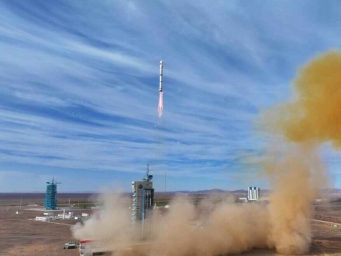
The return capsule of the Shenzhou-21 manned spacecraft touches down at the Dongfeng landing site, marking a new era in rapid space recovery technology.
On November 14, 2025, at 16:40 local time, the return capsule of China's Shenzhou-21 manned spacecraft successfully landed at the Dongfeng landing site in north China. The spacecraft had separated from the Tiangong space station just 5.5 hours earlier at 11:14, completing the country's first three-orbit autonomous rapid return—a remarkable achievement that shaved over three hours off previous return missions.
This successful demonstration represents a quantum leap in China's re-entry and return technology, showcasing significantly enhanced system reliability and opening new possibilities for more efficient and safer crewed space missions.
1 Mission Overview: From Space Station to Safe Landing
The Shenzhou-21 mission represents another step forward in China's ambitious crewed space program. The spacecraft's return process consisted of five critical phases: separation from the space station, braking, re-entry, deceleration, and finally, landing buffer.
This carefully choreographed sequence brought the Shenzhou-20 astronauts Chen Dong, Chen Zhongrui, and Wang Jie safely back to Earth, with all crew members reported to be in good health and having since arrived safely in Beijing.
The mission wasn't without its challenges. Originally scheduled for November 4, the return was postponed when safety monitoring detected that the spacecraft had potentially been struck by space micro-debris. Under the organization of the engineering overall department, the China Academy of Space Technology (CAST) immediately launched analysis and assessment.
They utilized robotic arms to photograph the impact area from multiple angles and organized experts to study these images along with those taken by astronauts. This rigorous risk assessment and design review process ultimately ensured the mission's success when it was rescheduled for November 14.
2 Technical Breakdown: The Three-Orbit Return Revolution
2.1 The GNC System: Spacecraft's "Intelligent Pilot"
At the heart of Shenzhou-21's rapid return capability lies the Guidance, Navigation and Control (GNC) system, developed by the 502 Institute of CAST. This sophisticated system acts as the spacecraft's "intelligent pilot," responsible for controlling the vehicle's flight from separation from the rocket all the way through to the return capsule's arrival on Earth.
The GNC system manages two critical aspects of the return process:
Deorbit control: This involves executing braking maneuvers to lower the spacecraft's orbit and initiate the return sequence.
Re-entry phase control: This manages the spacecraft's lift during atmospheric entry, crucial for managing G-forces and precision landing.
2.2 The Leap from Five Orbits to Three
The most significant advancement in Shenzhou-21's return profile wasn't merely doing things faster, but doing them smarter. While previous Shenzhou missions required approximately five orbits after undocking from the space station before initiating return procedures, Shenzhou-21 achieved this in just three orbits.
Table: Comparison of Shenzhou Return Profiles
Return Profile Number of Orbits Calculation Method Return Duration Key Characteristics
Standard Return Approximately 5 orbits Ground-based calculation ~8.5 hours Previously used by earlier Shenzhou missions
Rapid Return 3 orbits Onboard autonomous calculation ~5.5 hours Newly implemented for Shenzhou-21
The crucial innovation enabling this reduction was shifting the calculation of deorbit control braking parameters from ground-based systems to the spacecraft's onboard computer. This transition to autonomous computation allowed for more flexible and timely decision-making, eliminating the need to wait for ground-station contacts to perform necessary calculations.
To ensure the reliability of this autonomous calculation, the 502 Institute and the spacecraft system conducted multiple rounds of verification and recalculations. These comprehensive checks included:
Scheme correctness review: Verifying the overall approach was sound.
Flight procedure rationality review: Ensuring the flight sequence was logically structured.
Algorithm correctness review: Confirming the mathematical foundations were accurate.
Autonomous calculation results validation: Checking that the computer's outputs were both correct and effective.
3 Significance & Implications: Why Three-Orbit Return Matters
3.1 Enhanced Mission Efficiency & Crew Safety
The implementation of the three-orbit return capability brings substantial benefits to China's human spaceflight program:
Reduced Return Time: The most immediate benefit is the significant time saving—over three hours less from undocking to landing compared to the previous five-orbit profile. This translates to less time astronauts spend in the cramped confines of the return capsule during the most dynamic phases of return.
Improved Emergency Response: The autonomous rapid return capability strengthens the spacecraft's ability to handle major malfunctions during both autonomous flight and combined spacecraft operations. In emergency situations where immediate return is necessary, this technology provides a faster and more flexible response option.
Demonstrated System Reliability: The successful execution of this complex maneuver underscores the maturity and robustness of China's re-entry and return technology. The fact that the mission succeeded even after dealing with a suspected micro-debris impact further demonstrates the resilience of the system.
3.2 Historical Context: 30 Years of Re-entry Technology Development
Shenzhou-21's achievement represents the latest milestone in a three-decade evolution of Chinese re-entry and return technology. This development path can be divided into distinct generations:
First Generation (Shenzhou-1 to Shenzhou-11): These missions employed standard ballistic adaptive guidance methods, with deorbit control calculations performed on the ground.
Second Generation (Starting with Shenzhou-12): These spacecraft introduced adaptive predictive guidance methods, representing a significant advancement in re-entry control technology, though still relying on ground-based deorbit calculations.
Third Generation (Shenzhou-21): This latest iteration maintains the adaptive predictive guidance for re-entry but introduces the critical innovation of onboard autonomous deorbit calculation, completing the transition to a fully rapid return capability.
Table: Evolution of China's Re-entry Guidance Technologies
Generation Representative Missions Re-entry Guidance Method Deorbit Calculation Key Innovation
First Generation Shenzhou-1 to Shenzhou-11 Standard Ballistic Adaptive Guidance Ground-based Established fundamental re-entry capability
Second Generation Shenzhou-12 onwards Adaptive Predictive Guidance Ground-based Improved re-entry precision and adaptability
Third Generation Shenzhou-21 Adaptive Predictive Guidance Onboard Autonomous Enabled 3-orbit rapid return
4 Conclusion: The Future of China's Space Return Technology
The successful implementation of the three-orbit autonomous rapid return by Shenzhou-21 represents far more than just a faster descent to Earth. It marks China's mastery of advanced autonomous space navigation technologies that will prove crucial for future space station operations and beyond.
As noted in the official Chinese space program statement, "From Shenzhou-1's standard ballistic adaptive guidance to Shenzhou-12's adaptive predictive guidance and Shenzhou-21's rapid return after three orbits, Chinese aerospace engineers have forged a unique path for reentry and return technology over more than 30 years.".
Looking ahead, the China Academy of Space Technology has indicated it will "continue to strengthen the攻关 of key core technologies and continuously climb new peaks in manned space technology". The same autonomous calculation capabilities proven in Shenzhou-21's return could be applied to future lunar missions, deep space exploration, and emergency return scenarios where ground support may be limited.
This achievement demonstrates that China's advancements in space technology are not merely incremental improvements but substantial leaps forward—developments that will undoubtedly shape the future of human spaceflight and return capabilities for years to come.
|
|
 |周边二手车|手机版|标签|xml|txt|新闻魔笔科技XinWen.MoBi - 海量语音新闻!
( 粤ICP备2024355322号-1|
|周边二手车|手机版|标签|xml|txt|新闻魔笔科技XinWen.MoBi - 海量语音新闻!
( 粤ICP备2024355322号-1| 粤公网安备44090202001230号 )